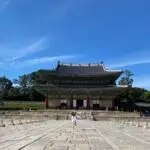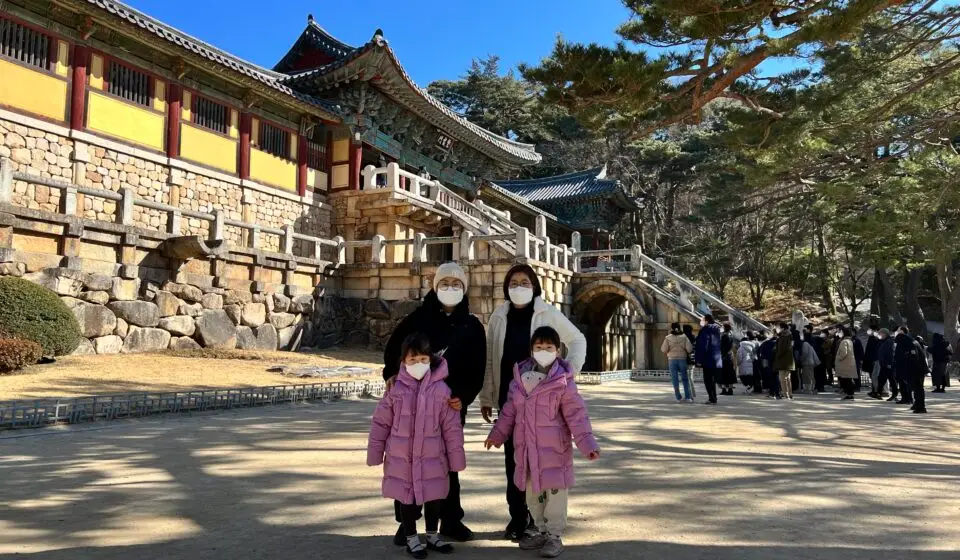

Located in Gyeongju, Bulguksa Temple is one of Korea’s most iconic Buddhist temples and a masterpiece of ancient architecture — with origins deep in the culture and belief systems of the Silla Kingdom. Along with the nearby Seokguram Grotto, it was inscribed as a UNESCO World Heritage Site in 1995 for its exceptional cultural value and artistic achievement.
🏯 A Brief History of Bulguksa
Bulguksa’s origins date back to the Unified Silla period. While its original foundation was built earlier to wish for peace and prosperity, the current complex was rebuilt and expanded in the 8th century under the direction of Kim Dae-seong, a high official who oversaw construction reflecting both spiritual symbolism and architectural brilliance.
Over centuries, the temple suffered destruction — including significant damage during the Imjin War (1592–1598) — but restoration efforts in the 20th century preserved its layout, aesthetics, and cultural elements, including iconic stone bridges and pagodas that are now designated National Treasures of Korea.
Today, Bulguksa stands as a profound testament to Korea’s Buddhist heritage and represents the pinnacle of Silla temple architecture.
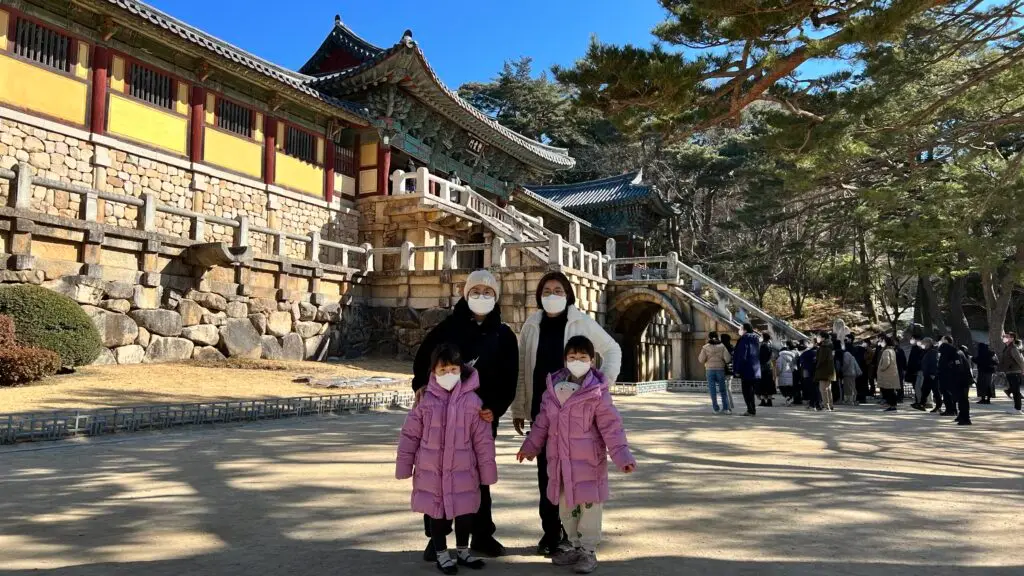
📍 Why Bulguksa Is a UNESCO World Heritage Site
UNESCO recognized Seokguram and Bulguksa for:
- Outstanding expression of Buddhist architectural tradition
- Harmony between built structures and natural landscape
- Mastery in stone and wooden construction techniques
- Cultural and spiritual continuity over centuries
Bulguksa isn’t just a place of worship; it was designed as a symbolic representation of the Buddhist universe, divided into multiple sacred areas that reflect different aspects of spiritual belief and enlightenment.
🗺️ Where It Is & How to Get There
Address: 385 Bulguk-ro, Gyeongju-si, Gyeongsangbuk-do, South Korea
Area: Mount Tohamsan (southern slope)
Getting There:
- 🚗 By car — ample parking is available near the temple entrance.
- 🚌 By bus — local buses from Gyeongju city center (e.g., Bus No.11) take about 10–15 minutes and stop near the temple.
- 🚕 Taxi from Gyeongju Station or downtown is quick and easy if you prefer door-to-door transport. (Typical taxi rides vary depending on season and traffic.)
🕰 Opening Hours & Admission
Opening Hours:
- Generally 09:00 – 18:00 daily.
Admission Fee:
- Typically around 6,000 KRW for adults.
Note that some seasonal changes or special events (e.g., temple ceremonies) may shift entrance procedure slightly, so checking the official site before visiting is recommended.
🧭 What to See at Bulguksa
Bulguksa boasts an expansive complex with a variety of historic structures, gardens, and symbolic spaces. Key highlights include:
🪨 Cheongun-gyo & Baegungyo Stone Bridges
These twin stairway bridges — National Treasure No. 23 — represent the spiritual path to enlightenment. Their elegant stone craftsmanship is often featured in cultural photography and guides to the temple.
🏯 Dabotap & Seokgatap Pagodas
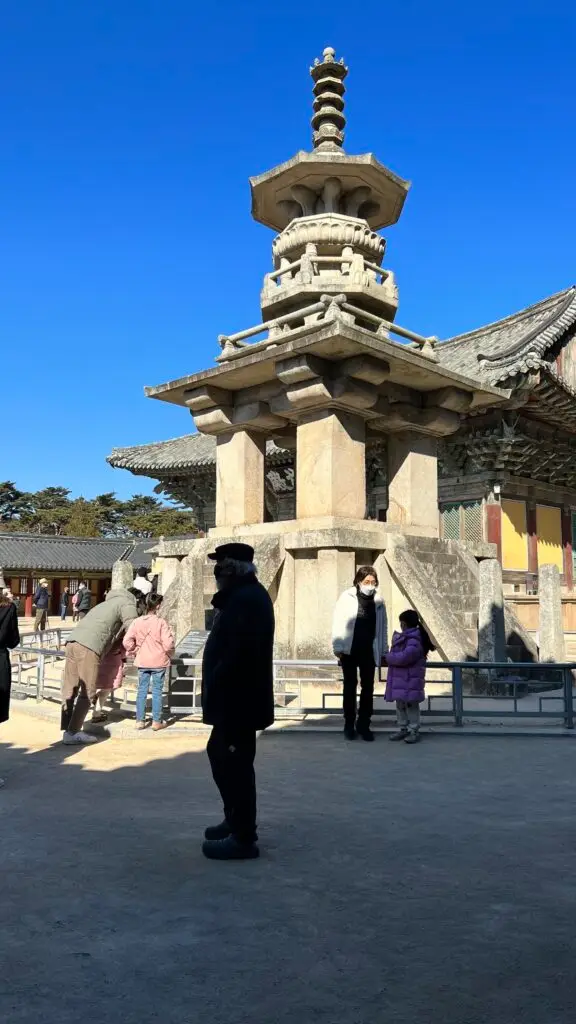
These two stone pagodas showcase distinct architectural styles: Dabotap’s intricate ornamentation contrasts with Seokgatap’s elegant simplicity. Both are part of Korea’s most prized pagoda art.
🛕 Daeungjeon Hall
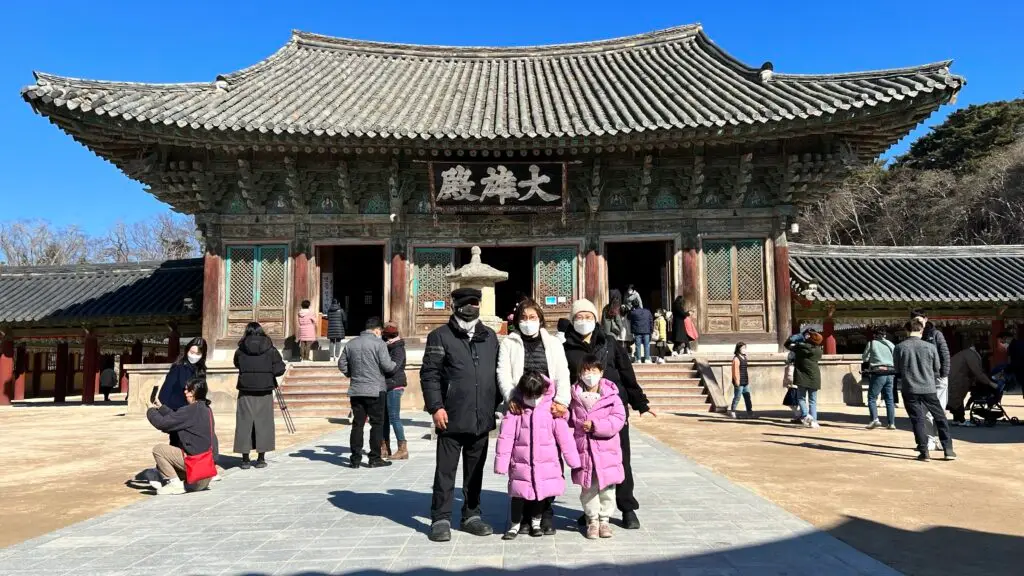
The main prayer hall enshrining the principal Buddha, this hall serves as the spiritual core of the temple complex and a masterpiece of wooden construction that echoes traditional Silla aesthetics.
🖼 National Treasures Within the Temple
Bulguksa contains numerous cultural treasures, including gilt bronze statues of Buddha, stone lanterns, and intricately carved reliefs showcasing advanced craftsmanship from the Silla period.
🌿 Best Time to Visit & Seasonal Highlights
🌸 Spring
Cherry blossoms and azaleas bloom around the stone terraces and pathways, creating serene photographic backdrops.
☀ Summer
Lush green foliage and soft light make for immersive walks around the temple grounds.
🍁 Autumn
Rich autumn colors transform the temple landscape — one of the best seasons for photography and contemplative strolls.
❄ Winter
Though colder, winter can offer peaceful visits with fewer tourists and dramatic contrasts between snow and traditional architecture.
Insider Tip: Early morning weekday visits (especially in winter) often mean minimal crowds and a near-solitary temple experience — great for photography and reflection.
📸 Photography Tips
- 📷 Wide-angle shots capture pagodas and bridges against ancient wooden halls.
- 🌅 Early light or late afternoon emphasizes textures and shadows of stone surfaces.
- 🍁 Autumn foliage near the hill slopes frames traditional structures beautifully.
- 🧘 Morning visits combine serene atmosphere with soft daylight — ideal for landscape photography.
🗓 Suggested Visit Itineraries
🕐 Half-Day Visit
- 09:00 Arrival & Entrance
- 09:15 Explore Cheongun-gyo & Baegungyo
- 10:00 Walk to Dabotap & Seokgatap
- 10:45 Visit Daeungjeon Hall
- 11:30 Temple Grounds Walk & Photo Stops
🕐 Full or Combined Visit
Combine Bulguksa with Seokguram Grotto — often done in a single day trip from Gyeongju center:
✔ Bulguksa Temple (1.5–2 hrs)
✔ Lunch in Gyeongju historic town
✔ Seokguram Grotto visit (1–1.5 hrs)
🛕 Temple Stay & Cultural Experience
While traditional temple stay programs are more common at larger monastic sites, Bulguksa sometimes offers cultural experience events (details vary seasonally). Visitors can inquire at the temple information office for available programs during their visit.
🛣 Nearby Attractions (Gyeongju UNESCO Area)
Bulguksa’s location in Gyeongju makes it perfect for broader cultural tours:
📍 Seokguram Grotto — a stone shrine with Buddha sculpture (UNESCO site).
📍 Gyeongju National Museum — artifacts from the Silla era.
📍 Daereungwon Tomb Complex — ancient burial mounds.
📍 Anapji Pond (Donggung Palace) — scenic night lighting and reflections.
These attractions can be aligned into a full day itinerary that balances history, art, and nature.
🧠 Travel Tips & Etiquette
✔ Respect sacred areas: temples are active places of worship — keep voices low.
✔ Photography rules: some halls may restrict flash or tripods.
✔ Footwear: comfortable shoes recommended — stone paths can be slippery when wet.
✔ Temple rituals: avoid entering prayer halls during ceremonies unless invited.
🏁 Final Thoughts
Bulguksa Temple is far more than a historical site — it’s a living testament to Korea’s Buddhist heritage, architectural ingenuity, and spiritual history. Its blend of stone bridges, pagodas, wooden halls, and natural surroundings makes it one of the most rewarding cultural experiences in the country.
Whether you’re a history enthusiast, photographer, or spiritual traveler, a visit here deepens your understanding of Korea’s ancient Silla legacy and Buddhist artistic excellence.