
Nestled in the rural landscapes of Chungcheongbuk-do, Nongdari Bridge (often referred to simply as Nongdari) is one of Korea’s most unique historical landmarks. Unlike traditional wooden or modern metal bridges, Nongdari is a stone footbridge built entirely from natural stone slabs — a testament to ancient Korean ingenuity in engineering and community life.
For travelers interested in history, architecture, and off-the-beaten-path destinations, Nongdari offers a fascinating glimpse into Korea’s cultural heritage and rural rhythm.
📍 What Is Nongdari Bridge?
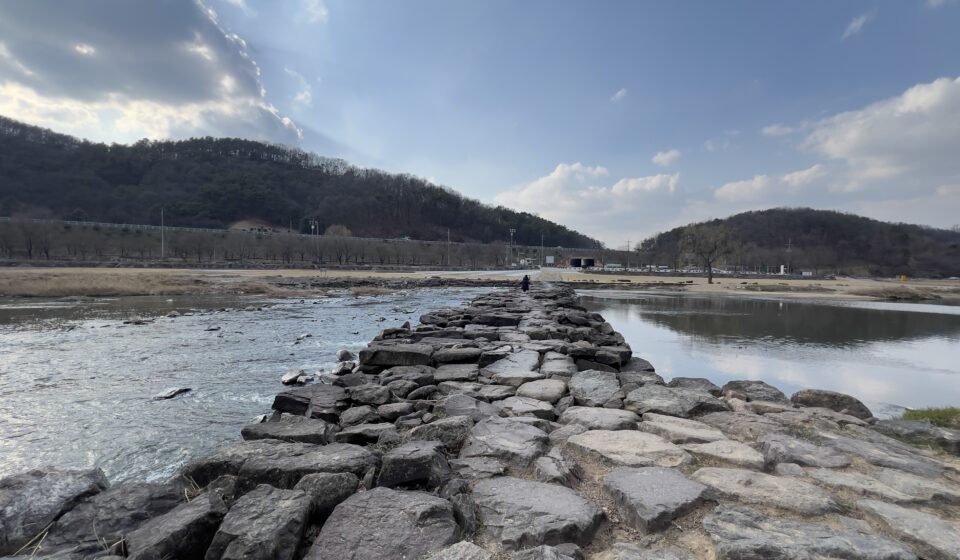
Nongdari Bridge is a shallow river crossing constructed by placing stone slabs across a flowing stream — a technique that allowed villagers and travelers to pass without stepping into deep water.
Unlike large architectural bridges, this flattened stone bridge blends naturally with the landscape. Its stones are often worn smooth from centuries of use, making the entire crossing feel like a living relic from Korea’s past.

🧠 Historical and Cultural Significance
While exact construction records are scarce, Nongdari is believed to date back several centuries, serving as a practical rural crossing before modern infrastructure existed.
In traditional Korean agricultural regions, rivers and streams were both life sources and obstacles. Bridges like Nongdari made it possible for:
✔ Farmers to bring goods to market
✔ Neighbors to visit across valleys
✔ Communities to connect without boats
These stone slab crossings appear in multiple regions of Korea, but the Danyang/Chungbuk Nongdari stands out for its scenic location and enduring structure.
🗺️ Where It Is & How to Get There
Location: Near the Namhan River and agricultural fields of Danyang County, Chungcheongbuk-do, South Korea.
🚗 By Car
- From Seoul: ~2.5–3 hours drive via expressways
- Parking available nearby (usually rural roadside parking)
🚌 By Public Transport
- Take an express bus to Danyang Bus Terminal
- Local taxi/micro taxi to Nongdari area
Public bus access to rural areas can be limited, so having a car or taxi is convenient.
🕐 Best Time to Visit
🌸 Spring
- Mild weather and fresh greenery
- Quiet atmosphere
☀ Summer
- Water levels higher — more dramatic flow
- Bring water shoes if stepping near water
🍁 Autumn
- Rich foliage enhances the stone and river contrast
- Great season for photography
❄ Winter
- Crisp, quiet scenery
- Lower water levels and clear stone details
🚶 What to Do at Nongdari
🪨 1. Cross the Stone Path
The main activity is walking across the stone slabs. It’s a sensory experience:
- Hear the river flow beneath your feet
- Feel the ancient stone texture
- Enjoy a cool breeze from the water
Be mindful — after rain, stones can be slippery.

📸 2. Photography from Multiple Angles
Great photo spots include:
✔ Low angle shots of slabs reflecting water
✔ Long exposures to capture flowing water
✔ Panoramic views of river valley and agricultural fields
🍃 3. Riverside Picnic & Relaxation
Many visitors bring simple snacks or tea and enjoy a slow riverside break. It’s a peaceful leisure stop on a Danyang scenic tour.
📷 Photography & Sightseeing Tips
- Wide shots work well to show the stretch of the stone bridge against the river
- Golden hour light (morning or late afternoon) creates soft shadows for textures
- After light rain, reflections on stones add visual depth
- Use a polarizing filter for clearer water reflections

🥾 Safety & Visit Tips
✔ Wear shoes with grip — stones can be slippery when wet
✔ Avoid rushing across — water current varies by season
✔ Keep children close while walking on stones
✔ Bring water and sun protection in summer
🧭 Nearby Attractions (Danyang Highlights)
Nongdari is often combined with other scenic spots in Danyang, making it ideal for a full scenic day trip:
📍 Dodamsambong Peaks — Three basalt pillars rising from Namhan River
📍 Mancheonha Skywalk — Glass-bottom observation deck
📍 Gosu Cave — Limestone caves and underground paths
📍 Cheongpung Cultural Heritage Complex — Scenic waterside village
📍 Sainam Rock — Riverside cliff views
A typical half-day itinerary:
- Gosu Cave → Lunch
- Cheongpung Lake → Nongdari
- Sunset at Dodamsambong → Dinner
🚗 Suggested Route & Tips
- Start early in the morning for quiet scenery
- Combine Nongdari with lunch in Danyang town
- Schedule sunset at Dodamsambong Peaks for dramatic views
🍂 Why Nongdari Bridge Is Worth Visiting
Most travelers come for:
✔ Cultural experience — a relic of pre-modern Korea
✔ Riverside beauty — harmonious with natural scenery
✔ Photography opportunities — rivers, stones, surrounding landscape
It’s not a major temple or palace — but its quiet authenticity and grounded nature make Comune Korea’s rural charm unforgettable.