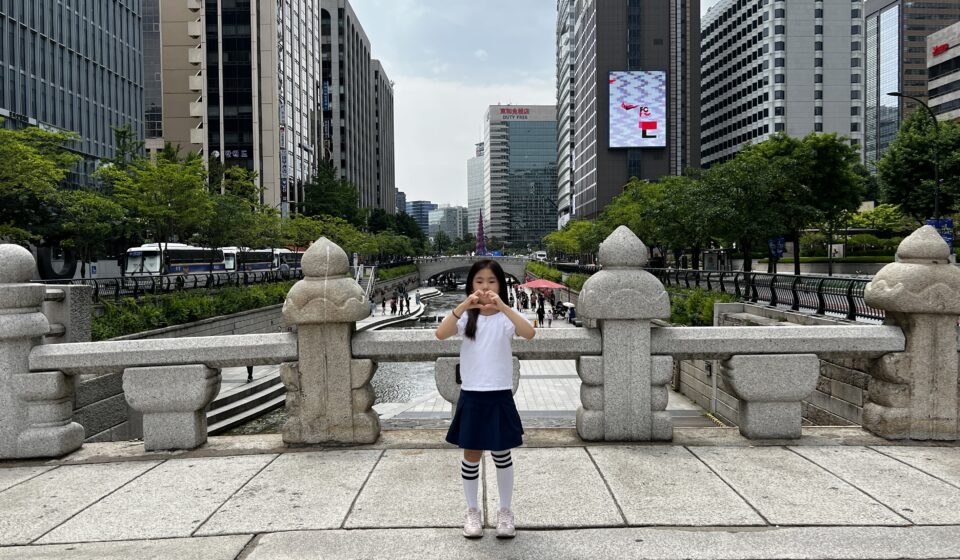

In the middle of one of Asia’s most dynamic megacities, a gentle stream flows quietly between glass towers and busy roads. Cheonggyecheon Stream is not just a scenic walking path — it represents urban renewal, environmental restoration, and modern Korean identity.
If you are planning a visit to Seoul, this guide will help you understand its history, cultural meaning, seasonal beauty, and practical travel tips.
1. What Is Cheonggyecheon Stream?
Cheonggyecheon Stream is an 11-kilometer-long restored waterway running through downtown Seoul, South Korea. It begins near Cheonggye Plaza and flows eastward toward the Han River.
Today, it is:
- A public ecological park
- A pedestrian-friendly walking route
- A cultural event space
- A symbol of sustainable urban planning
But it was not always this peaceful.

2. Historical Background: From Natural Stream to Highway — and Back Again
Joseon Dynasty Origins
During the Joseon Dynasty, Cheonggyecheon functioned as a natural drainage channel protecting Seoul (then called Hanyang) from flooding. Stone bridges such as Gwangtonggyo were constructed to improve access.
Industrialization and Covering (1960s–1970s)
As South Korea rapidly industrialized, the stream became polluted. To accommodate urban growth, it was covered with concrete and eventually replaced by an elevated highway.
For decades, most residents forgot that a stream even existed beneath the road.
Restoration Project (2003–2005)
Under the leadership of Lee Myung-bak (then Mayor of Seoul), a massive urban restoration project removed the highway and revived the waterway.
The restoration:
- Reduced urban heat island effects
- Improved air quality
- Increased biodiversity
- Revitalized surrounding business districts
Today, it is studied worldwide as a model for urban ecological renewal.
3. Why Cheonggyecheon Matters Globally
Urban planners frequently reference Cheonggyecheon alongside projects in:
- New York City (High Line Park)
- Madrid (Madrid Río Project)
It demonstrates how removing car-centered infrastructure can:
- Improve quality of life
- Encourage tourism
- Increase nearby property values
- Create healthier public spaces
For Korea, it symbolizes the transition from rapid industrial growth to sustainable development.
4. What to See Along the Stream
Cheonggye Plaza
Located near City Hall, this is the starting point. The spiral sculpture represents the stream’s historical flow.
Gwangtonggyo Bridge
One of Seoul’s oldest stone bridges, originally built during the Joseon period.
Wall of Wishes
Colorful lanterns and art installations frequently appear here during festivals.
Dongdaemun Design Plaza (DDP)
Near the eastern end, you’ll find Dongdaemun Design Plaza, designed by Zaha Hadid. The futuristic architecture contrasts beautifully with the natural stream.

5. Seasonal Beauty Guide
🌸 Spring (March–May)
Cherry blossoms and fresh greenery make it ideal for photography.
☀ Summer (June–August)
The water cools the surrounding air by several degrees. Many locals sit along the edge and dip their feet.
🍁 Autumn (September–November)
Golden foliage reflects on the water — one of the most peaceful times to visit.
❄ Winter (December–February)
During the Seoul Lantern Festival, the stream glows with artistic light installations.
6. Practical Travel Information
Location: Central Seoul
Nearest Subway Stations:
- City Hall Station (Line 1 & 2)
- Jonggak Station (Line 1)
- Dongdaemun History & Culture Park Station
Entrance Fee: Free
Open Hours: 24 hours (best during daylight or early evening)
Recommended Walking Time: 1–2 hours (partial route)
7. Best Time to Visit
- Early morning: quiet and peaceful
- Sunset: beautiful lighting for photos
- Evening: romantic city atmosphere
Avoid heavy rain days, as water levels may temporarily rise.

8. Is It Worth Visiting?
If you enjoy:
- Urban photography
- Light walking routes
- Korean city culture
- Sustainable architecture
- Quiet spaces in busy cities
Then Cheonggyecheon Stream is absolutely worth adding to your Seoul itinerary.
It may not be a dramatic natural canyon or mountain — but it tells the story of modern Korea’s transformation.
9. Final Thoughts
Cheonggyecheon Stream shows how a city can reinvent itself. What was once hidden beneath concrete is now one of Seoul’s most beloved public spaces.
For travelers exploring Korea beyond palaces and shopping streets, this urban oasis offers a slower, more reflective experience.