Gwangjang Market – A Deep Cultural and Culinary Guide to Seoul’s Oldest Traditional Market

Established in 1905, Gwangjang Market is widely recognized as the oldest continuously operating traditional market in Seoul. More than a street food destination, it is a living archive of Korea’s culinary traditions, small-scale commerce, and urban resilience.
Located in the historic Jongno district, the market reflects the layered identity of Seoul — where royal palaces, modern office towers, and century-old food stalls coexist within walking distance.
This guide provides historical context, cultural interpretation, practical travel advice, and food insights to help you understand not just what to eat — but why this market matters.
1. Historical Background: From the Korean Empire to Modern Seoul
Gwangjang Market was founded during the late Korean Empire period as a response to growing foreign commercial influence. At the time, Korean merchants sought to create a locally operated marketplace that would strengthen domestic trade.
Unlike temporary street bazaars, Gwangjang was designed as a permanent indoor market structure. This distinction helped it survive:
- Japanese colonial rule (1910–1945)
- The Korean War (1950–1953)
- Rapid industrialization in the 1960s–80s
- The rise of supermarkets and online commerce
Today, it remains one of the few places in Seoul where commercial traditions from the early 20th century are still visible.

2. The Market Layout and Atmosphere
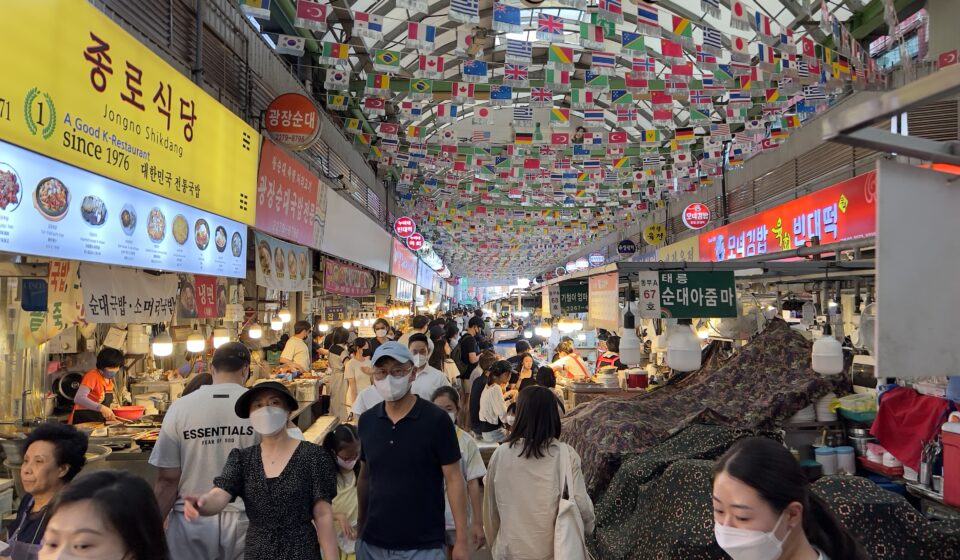
The food alley is the most famous section. Long rows of identical stalls create a narrow corridor filled with steam, sizzling sounds, and constant movement.
From personal observation during peak lunch hours:
- Seating is communal
- Vendors cook directly in front of customers
- Orders are taken quickly and efficiently
- Staff move with remarkable speed and coordination
The sensory environment — hot oil crackling, mung bean batter being poured, metal chopsticks clinking — creates an immersive culinary experience.
Unlike curated tourist markets, Gwangjang remains functionally local. Office workers, elderly residents, students, and international visitors sit side by side.
3. Signature Foods and Their Cultural Context
Bindaetteok (Mung Bean Pancake)
This dish became popular during times of rice scarcity because mung beans were more affordable. The pancake’s crispy exterior and hearty interior reflect Korea’s resourceful food culture.
Traditionally paired with makgeolli (Korean rice wine), it represents working-class culinary heritage.

Kalguksu (Knife-Cut Noodles)
Hand-cut noodles symbolize home-style cooking. The broth, often anchovy-based, reflects Korea’s coastal ingredient influence.
Its simplicity is intentional — comfort rather than complexity.
Mayak Gimbap
These bite-sized rolls are designed for quick consumption. The name “mayak,” meaning addictive, refers to the mustard dipping sauce that enhances flavor intensity.
Yukhoe (Korean Beef Tartare)
A traditional dish rooted in royal and aristocratic cuisine. The combination of raw beef, pear slices, sesame oil, and egg yolk balances richness and sweetness.

Sannakji (Live Octopus)
This dish highlights Korea’s seafood culture and preference for extreme freshness. It is often chosen by adventurous diners seeking an authentic experience.
4. Textile and Hanbok Section: The Overlooked Heritage
Beyond food, Gwangjang Market houses one of Seoul’s largest traditional fabric districts.
Historically, this area supplied:
- Hanbok fabric
- Wedding garments
- Custom tailoring materials
Even today, professional tailors and wedding planners source silk and traditional textiles here.
This dual identity — food and fabric — distinguishes Gwangjang from other markets.
5. Cultural Significance in Contemporary Korea
In a city dominated by modern retail chains, Gwangjang Market remains relevant because it offers:
- Intergenerational business continuity
- Direct producer-to-consumer trade
- Affordable traditional meals
- Cultural familiarity for older generations
It represents economic survival through adaptation.
Following global exposure through the Netflix series Street Food, international tourism increased significantly. However, the market has maintained its local character rather than transforming into a fully commercialized attraction.
6. Practical Travel Information
Location: 88 Changgyeonggung-ro, Jongno-gu, Seoul
Nearest subway: Jongno 5-ga Station (Line 1), Exit 8
Recommended visit time:
- Late morning (10:30 AM–12:00 PM) for manageable crowds
- Weekdays for shorter wait times
Average meal cost:
- 5,000–12,000 KRW per dish
Payment:
- Most vendors accept cards, but cash is efficient
7. Nearby Cultural Sites
Gwangjang Market is within walking distance of several major landmarks:
- Cheonggyecheon
- Changdeokgung Palace
- Insadong
Combining these sites creates a balanced itinerary of food, history, and urban relaxation.
8. Is Gwangjang Market Worth Visiting?
Yes — particularly for travelers seeking:
- Authentic Korean street food
- Historic marketplaces
- Cultural immersion
- Affordable dining in central Seoul
It is not a sanitized experience. It is loud, crowded, and occasionally chaotic. But this authenticity is precisely what defines its value.

9. Responsible Visiting Tips
- Respect shared seating
- Avoid food waste
- Support long-standing vendors
- Follow hygiene etiquette
- Be patient during peak hours
Cultural sensitivity enhances the experience.
FAQ Section (Search Intent Optimization)
What makes Gwangjang Market different from other Seoul markets?
Its historical continuity since 1905 and its specialization in traditional food distinguish it from more modernized markets.
How much time should I allocate?
Plan 1–2 hours for food exploration and photography.
Is it suitable for families?
Yes, although peak hours can be crowded.
Do vendors speak English?
Some do, but pointing at menu items is common practice.