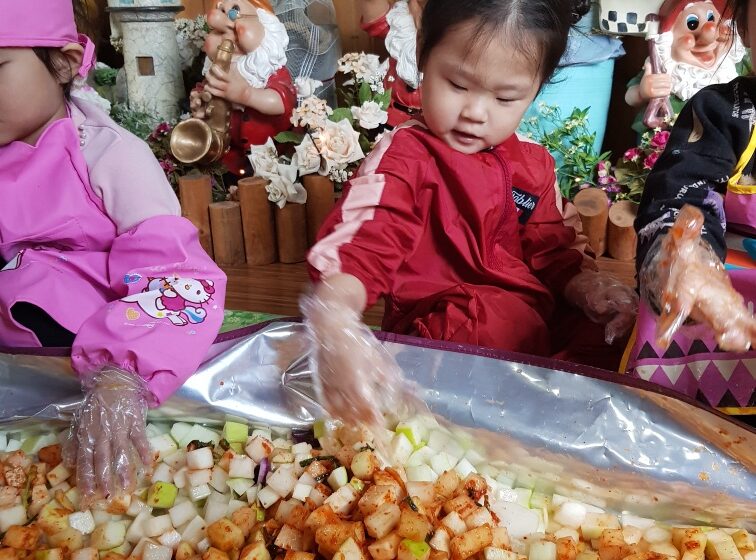
Kimchi and Kimjang: Understanding Korean Lifestyle Through Food and Tradition (2026 Complete Guide)

Kimchi isn’t just a side dish — it’s a way of life in Korea. From humble beginnings to global recognition, kimchi encapsulates centuries of history, seasonal rhythms, community spirit, and distinct regional tastes.
Among all kimchi-related traditions, Kimjang — the communal preparation and sharing of kimchi in late autumn — stands as a testament to Korean culture and social values. In fact, UNESCO recognized “Kimjang, making and sharing kimchi in the Republic of Korea” as an Intangible Cultural Heritage in 2013.
This guide explains kimchi’s history, varieties, cultural context, the kimjang process, and how you can experience these traditions during your visit to Korea.
📍 What Is Kimchi?
Kimchi (김치) is a fermented vegetable dish that is a staple in Korean cuisine — typically made with salted napa cabbage, radish, garlic, ginger, chili pepper, and other seasonings.
It’s served with almost every Korean meal and reflects a deep connection between Korean food culture and seasonal fermentation practices.
Why Is Kimchi So Important?
- Rich in probiotics and nutrients
- Central to daily meals
- Represents seasonal cycles and communal culture
- Part of national identity (even exported worldwide)
🧠 A Brief History of Kimchi
The roots of kimchi go back over a thousand years. Early forms were simple salt-fermented vegetables without red chili pepper — which was introduced to Korea in the 16th century through trade routes.
The spicy, red-colored kimchi we know today began to emerge after chili peppers became part of Korean cuisine. Over time, kimchi evolved into a fermented food rich in flavor, nutrition, and cultural meaning.
Kimchi has been mentioned in Korean texts and poems throughout the Joseon Dynasty (1392–1897) and later documented in cookbooks and culinary records.
🥬 What Is Kimjang?
Kimjang (김장) is the traditional communal preparation of kimchi in late autumn — typically October to early December — when families and communities gather to make large quantities of kimchi for the winter months.
Why Kimjang Matters
✔ Preserves vegetables before winter
✔ Encourages communal cooperation
✔ Reinforces family and community bonds
✔ Shared meals & cultural knowledge passed generation to generation
In traditional Korean villages, neighbors would gather, prepare, and share kimchi together, reinforcing social ties and mutual support.
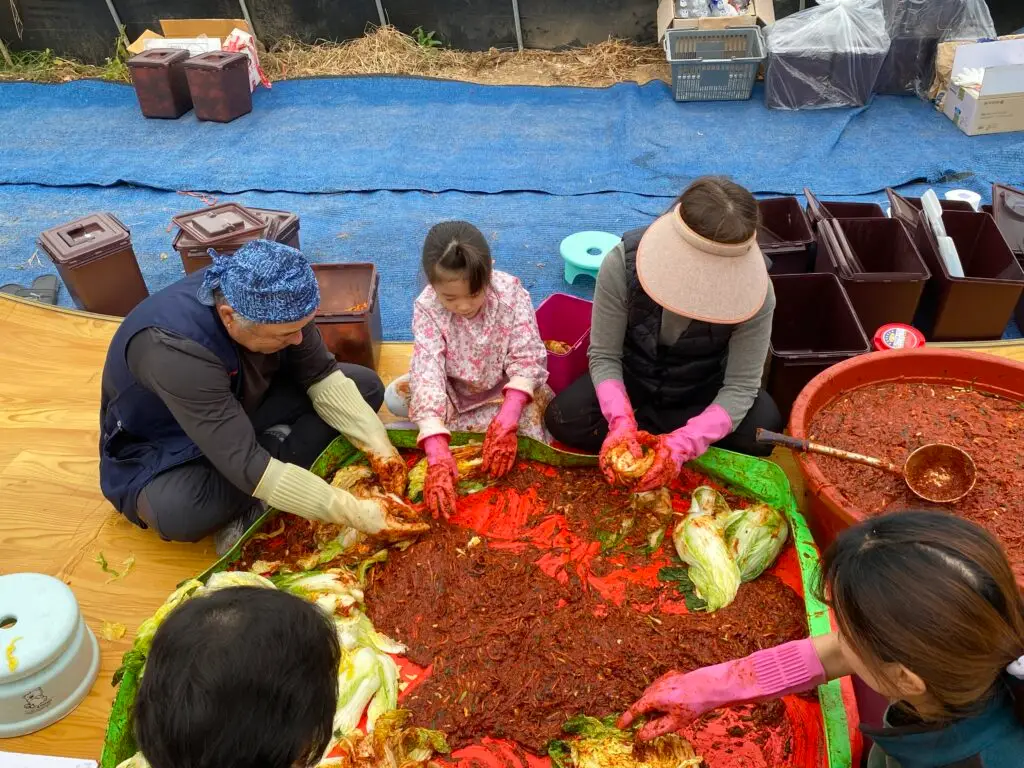
🥢 How Kimjang Works (Step-by-Step)
- Preparation
- Large napa cabbage and Korean radish are cleaned and salted
- Salting draws moisture out and preserves texture
- Seasoning
- Red chili pepper flakes (gochugaru), garlic, ginger, fish sauce, and other ingredients mixed into a paste
- Coating
- Each cabbage leaf is evenly coated with seasoning
- Packing
- Packed into jars or containers (called onggi) for fermentation
- Fermentation
- Stored in cool places — traditionally underground or in cold storage
- Gradual fermentation turns kimchi tangy and savory
This process can take hours to days depending on scale and recipe variations.
🌶️ Kimchi Varieties Across Korea
Korea has dozens of kimchi types, each with unique regional or seasonal characteristics:
🥬 Baechu Kimchi (배추김치)
- The most common variety
- Napa cabbage fermented with seasoning paste
🥕 Kkakdugi (깍두기)
- Diced radish kimchi
- Crisp texture and refreshing flavor
🌿 Chonggak Kimchi (총각김치)
- Whole young radish kimchi
- Traditional and popular in rural areas
🐚 Gat Kimchi (갓김치)
- Made with mustard greens
- Common in southern regions like Jeolla
🐟 Bossam Kimchi (보쌈김치)
- Wrapped kimchi with seafood and condiments
- Often served with boiled pork
Each region — from Jeollanam-do to Gyeongsangbuk-do to Gangwon-do — brings subtle differences to ingredients or fermentation style.
🍲 Kimchi & Korean Meals
In Korea, a meal isn’t complete without kimchi and banchan (side dishes). It’s served at:
✔ Breakfast
✔ Lunch
✔ Dinner
✔ Special banquets and holidays
Kimchi’s tangy, spicy profile complements rice, stews, grilled meats, noodles, and more. With every bite, you can taste a blend of history, fermentation science, and cultural flavor.
📍 Experience Kimjang as a Traveler
If you visit Korea in late autumn (typically November), you can participate in kimjang events at cultural centers, traditional villages, and community tours in regions like:
➡ Jeolla Province — known for rich food culture
➡ Gyeonggi Province and Seoul community kimjang events
➡ Gyeongsang Province for regional styles
Many cultural tourism programs let visitors join hands-on kimchi making, taste freshly made kimchi, and learn the meanings behind each ingredient.
💡 Travel Tip: Book these experiences in advance — places fill up fast during kimjang season.
🍴 Kimchi Around Korea: Regional Highlights
🌾 Jeolla & Gyeongsang Regions
Rich, bolder seasoning profiles — often spicier and deeper fermentation.
🌊 Coastal Areas (e.g., Busan, Ulsan)
Seafood-based kimchi like ojingeo kimchi (squid kimchi) or mul kimchi (water kimchi).
🍁 Gangwon & Chungcheong
Lighter seasoning, crisp texture, and refreshing winter kimchi.
Each locale emphasizes different ingredients — like salted seafood (jeotgal), herbs, or local vegetables.
🏠 Try Kimchi Making in Korea
Here’s how to make a simple bowl of baechu kimchi at home during your travel:
Ingredients
✔ Napa cabbage
✔ Korean radish
✔ Gochugaru (Korean chili flakes)
✔ Garlic, ginger
✔ Fish sauce or salted shrimp
✔ Scallions
Steps (Simplified)
- Soak cabbage in saltwater for several hours
- Rinse and drain cabbage
- Mix seasoning paste
- Apply paste between leaves
- Store in airtight container for fermentation
Your first batch may be tangy and spicy — that’s authentic kimchi!
🍽 Kimchi With Korean Dishes
Kimchi pairs well with:
✔ Kimchi jjigae (kimchi stew)
✔ Kimchi bokkeumbap (fried rice)
✔ Kimchi jeon (savory pancake)
✔ Bossam (boiled pork wraps with kimchi)
✔ Bibimbap (mixed rice bowl with kimchi side)
Try these combos at local restaurants in Seoul, Jeonju, Busan, and Gyeongju — each city offers unique takes on kimchi pairings.
🧪 Health Benefits of Kimchi
Kimchi provides:
✔ Probiotics beneficial for digestion
✔ Vitamins A, B, C
✔ Antioxidants from garlic, ginger, chili
✔ Potential immune support
Korean researchers continue to study kimchi’s health impact — some studies suggest its fermentation microbes may support gut health and overall immunity.
📸 Photography Tips for Kimchi Culture
✔ Capture kimchi pots (onggi) lined up at traditional homes
✔ Photograph kimjang gatherings with natural lighting
✔ Take close-ups of colorful ingredients and textures
✔ Street food kimchi dishes make engaging food photos

✨ Fun Kimchi Facts
✔ UNESCO Intangible Cultural Heritage status
✔ Korea produces over 1.5 million tons of kimchi annually
✔ Kimchi fridge is a staple in most Korean homes
✔ There are regional kimchi festivals throughout the year
📌 Final Thoughts: Kimchi as Cultural Identity
Kimchi is far more than a fermented side dish — it’s a cultural mirror reflecting Korea’s seasonal rhythms, communal values, historical tastes, and culinary creativity.
From humble village kimjang gatherings to global fusion cuisine, kimchi connects food, family, and heritage.
Next time you enjoy kimchi with a Korean meal, you’re tasting centuries of tradition and community spirit.